
Camelot on the Carolina Coast
The pioneering accomplishments of the developer of Hilton Head Island’s Sea Pines Resort left a legacy that spans decades.

“More than fifty years have passed since I first set foot on Hilton Head Island, and still, the tides of gratitude wash over me each time I cross the bridge. This island captured my heart then, and it still does now. My daughter, Margaret, and her family live in Sea Pines, walking the same paths she did as a child. Watching her children grow up here feels like closing a perfect circle.”
I’ve come to realize that many newcomers to the island don’t know its remarkable history—the story of how this place came to be, who dreamed it into existence, and why it feels so alive.
The Birth of Sea Pines: How a Young Visionary Saw the Future in the Forests of Hilton Head
Until the mid-1950s, Hilton Head Island was little more than a quiet, rural outpost—accessible only by ferry and known mostly to farmers, oystermen, and timbermen. Roughly 500 residents called the island home, living a simple life that revolved around the tides and the soil. Then came a bridge in 1956, and with it, the beginnings of a transformation that would change the Lowcountry forever.
The story starts in Hinesville, Georgia, where the Fraser family had long been involved in the timber industry. General Joseph Fraser, a respected businessman and World War I veteran, sent his son Joe Jr. to Hilton Head to survey the island’s thick stands of pine and live oak. Joe set up camp on a remote spit of land called Calibogue Cay, at the island’s southern tip—land that would one day become home to the iconic Harbour Town.
That same summer, Joe’s younger brother Charles, freshly graduated from the University of Georgia, joined the island logging camp before heading to Yale Law School. Hilton Head cast a spell over him. The beaches stretched for miles without a footprint. Towering pines whispered above untouched dunes, and live oaks draped in silver moss shaded narrow dirt roads that led to nowhere in particular. To Charles, it wasn’t just a timber tract—it was a paradise waiting to be reimagined.
By 1950, the family purchased roughly 20,000 acres of this pine forest for about $60 an acre. But Charles saw something more valuable than lumber. He envisioned a carefully planned community—one that respected the island’s natural beauty instead of erasing it. Persuasive and precocious, he convinced his father to give him full legal control of the southern acreage and a twenty-year note on the land. Then, at Yale, he made Hilton Head his classroom project, shaping a vision that would become Sea Pines Plantation—a revolutionary blend of residential living, resort design, and environmental stewardship.
What began as a timber camp became the seed of a new philosophy in coastal development. And it all started with one young man, standing beneath the pines, dreaming of a better way to build.
Charles’s Dream
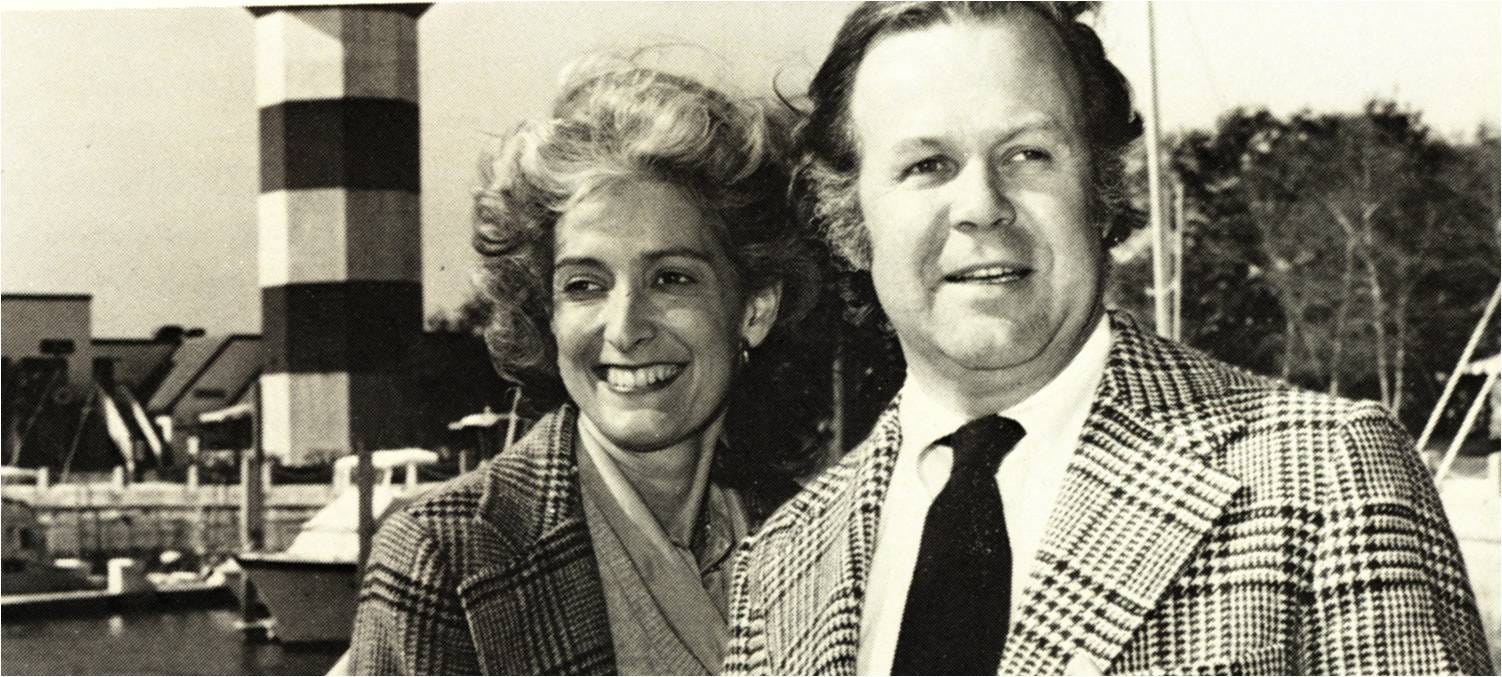
He envisioned Sea Pines as both a resort and a year-round community—a place where people could live close to nature without disturbing it. In the 1960s, he and his wife, Mary, often talked about what would become the true heart of the development. They wanted something more than homes and roads—something that would draw people together.
A decade into his vision, Charles had raised enough capital to create that heart. The question was: what would it be? He and his team spent months wading through a swampy land, imagining possibilities and arguing over details. The location was wild and untamed—exactly the kind of place Charles loved to transform without erasing its spirit.
The Spark of Inspiration
Charles and Mary traveled widely, studying planned communities in places like Williamsburg, Virginia, but nothing seemed quite right. Hilton Head was an island; it needed something that belonged to the water. Charles, an avid sailor, found his answer one day with characteristic flair.
“I’ll build a harbor,” he told Mary. “A harbor town.”
And she, in her calm wisdom, replied, “That’s it.”
Early critics dismissed the idea as fanciful—“Fraser’s Folly,” they called it—but Charles pressed on. He wanted to design a harbor unlike any other in America, one that would celebrate the island’s natural beauty and Lowcountry charm.
A Journey to the Mediterranean
To shape his vision, Charles and Mary chartered a plane with Sea Pines’ architect and senior executives and spent a month exploring ports along the Mediterranean coast. They studied villages that clung to the shoreline, noting the harmony between water, architecture, and community life.
Of all the places they visited, one stood out above the rest—Portofino. Italy. The pastel façades, narrow promenades, and gentle rhythm of harbor life struck a chord. Here was a place where every window seemed to open onto sunlight and sea breezes, where the town and the tide moved in perfect unison.
When Charles returned home, he brought with him that same sense of intimacy and color. Harbour Town would echo the soul of Portofino, not by imitation but by inspiration—an American harbor with European grace, firmly grounded in Lowcountry soil.
The Lighthouse
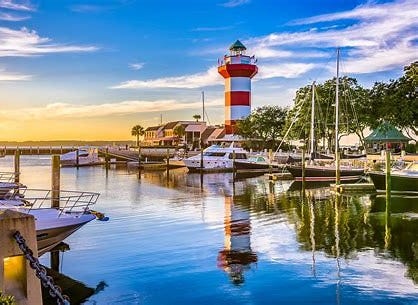
Charles knew his harbor would need a beacon. No harbor is complete without a lighthouse, and in 1969, no private developer had built one since 1817. True to form, he refused to follow convention. He rejected plan after plan until an octagonal design caught his eye.
Then came the question of color. Designers proposed stripes, shapes, even abstract patterns, but nothing felt right. The answer came from Charles’s brother, Joe, who noticed a piece of rusty red steel near the construction site and said, “That’s the color.”
Charles agreed. And so the Harbour Town Lighthouse became the bold red-and-white symbol recognized around the world—a beacon not just for boats, but for Hilton Head itself.
The Liberty Oak
While the harbor was under construction, Charles discovered a magnificent live oak near the water’s edge. The tree stood exactly where engineers planned to dredge. “Save it,” Charles insisted. Re-routing the design would cost $50,000—an enormous sum in 1969—but he stood firm.
That decision preserved what became known as the Liberty Oak, now one of the most beloved symbols of Sea Pines. Beneath its branches, generations of families have gathered to listen to Gregg Russell sing beneath the stars. His nightly concerts turned Harbour Town into a living stage, where music, laughter, and the rustle of Spanish moss blended into the soundtrack of our summers. First, my children sat in front of the stage and sang with Gregg, and now my grandchildren sit and listen. Some things are lasting and possibly eternal.
Charles and Mary often hosted Sunday afternoon sails aboard The Compass Rose, their 42-foot sloop. Captain Peter Ovens guided us through Calibogue Sound as dolphins danced alongside. Those trips taught us to love the wind, the water, and the wonder of our island life.
Charles’s genius wasn’t just in what he built—it was in the joy he inspired.
Legacy and Gratitude
Today, Charles Fraser rests beneath the Liberty Oak, the very tree he saved more than half a century ago. A bronze bust and plaque mark his resting place—a quiet tribute to a visionary who gave Hilton Head its soul.
Why Charles Fraser matters
Charles Fraser matters because he set the bar high for future developers. His transactions were not about buildings but about experiences involving people. He believed one important way to affect how a place lives is to make your best pieces of property available to everyone.
He was a pioneer in the concept of master-planned community resort developments and initiated the development of Sea Pines Plantation on Hilton Head Island and Kiawah Island Resort in South Carolina, as well as Amelia Island Plantation in Florida. In addition, the award-winning resort has hosted the PGA Tournament’s Heritage Classic since 1969, which largely began with Fraser’s involvement. In 2002, Fraser died in a boating accident, but his legacy continues through his developments and this event.
Why are homes and property so much more expensive than the rest of the island? It is because Sea Pines is the flagship community of its kind in the world. It is set apart. Other resort communities use Sea Pines as a blueprint from which to build their own. The community Fraser dreamed of and built has become endeared by millions. This fact holds great value.
The Heart Still Beats
This is not simply a history lesson; it’s a love letter that connects us to the tides that shaped us and to the hearts that are still fortunate enough to call this island home.
If you have lived on the island since its early days or have visited there, share your story with us. Join the conversation and help preserve this cherished history. If not, your story may be lost forever with the changing tides. Only you can tell your story.

Thank you for this beautifully written and thorough history of such an iconic Lowcountry destination. So many people just see the tourist attractions it offers and don’t look beneath all of that to see its fascinating history. It’s intriguing how those who founded it and created the iconic structures everyone loves about it were able to blend in European beauty and American history to create the perfect resort.