
Collard Greens Taste Sweeter After the Frost
It's a Southern truth you can taste to verify.

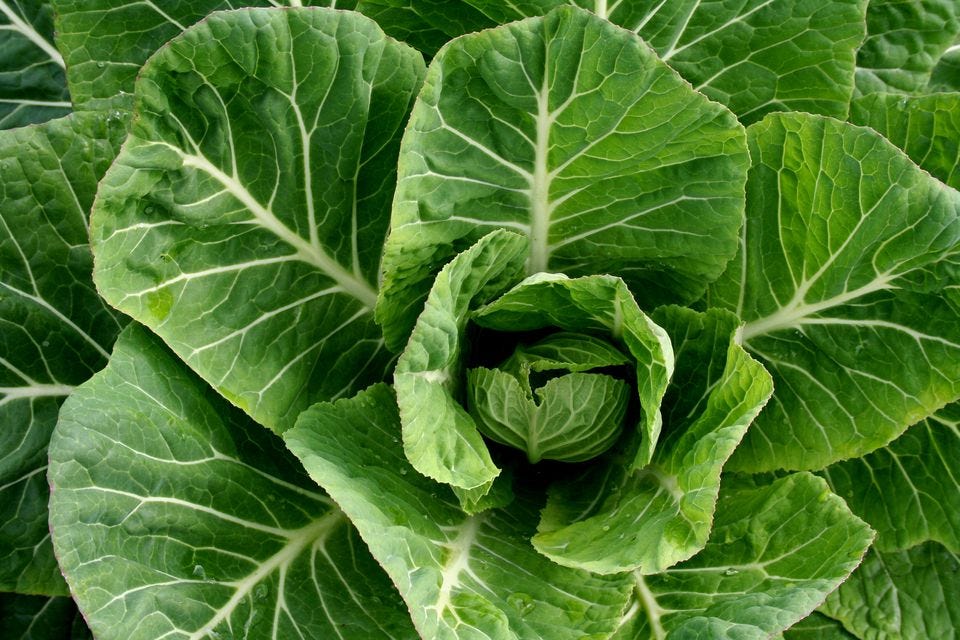
“Southern food is a celebration of life. It’s about taking the bounty of the land and turning it into something that nourishes both body and soul.” Edna Lewis, Grande Dame of Southern cooking. The Virginia-born chef did more than anyone to elevate Southern food to haute cuisine.
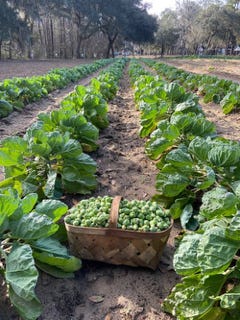
Some children are obsessed with soldiers, dinosaurs, and princesses. Edna Lewis grew up in love with food and the land that yielded it. “I loved walking barefoot behind my father in the newly ploughed furrow, carefully putting one foot down before the other and pressing it into the warm ploughed earth, so comforting to the soles of my feet,” Lewis wrote in her seminal 1976 cookbook, The Taste of Country Cooking.
On some occasions, the plough would expose the roots of a sassafras bush, which Lewis and her father would take back home to brew tea the next morning. “Planting season was always accompanied by the twilight arrival of the whippoorwill, repeating breathlessly and rapidly,” she recalled on another occasion. For Lewis, the “birds, the quiet, flowers, trees, gardens, fields, music, love, sunshine, rain, and the smells of the earth” were her muse and would play a large part in her ascendance to the heights of American cooking as the grande dame of Southern cooking. A proponent of locally sourced food long before it was fashionable, she would go to great lengths to seek out only the most genuine and freshest ingredients.
Collards and cornbread were a meal unto themselves at my grandmother’s North Carolina home. We learned to love them early—slow-cooked greens spooned onto a plate with crumbly cornbread—especially alongside Christmas ham and the ever-present pot of black-eyed peas simmering on New Year’s Day.
There’s a reason greens show up on Southern tables when the calendar turns. Their deep green color is said to symbolize money, and eating them on January 1 is believed to promise prosperity in the year ahead. Black-eyed peas, long associated with good luck, have been part of Southern foodways for more than three centuries.
All across the South, Hoppin’ John remains the most beloved New Year’s Day dish—a humble, soulful bowl that carries hope, history, and a wish for better days ahead.
At its heart, Hoppin’ John is a simple dish of black-eyed peas cooked with rice and pork — often a ham hock, bacon, or salt pork — seasoned gently and meant to stretch, nourish, and comfort. Like so much Southern food, it was born of necessity and resourcefulness, shaped by West African traditions brought to the Lowcountry by enslaved people and adapted to what was available in Southern kitchens.
The black-eyed peas symbolize luck and survival. The pork represents progress and prosperity — pigs root forward, never backward. Add rice for abundance, greens for wealth, and cornbread for gold, and suddenly the plate becomes a quiet prayer for the year ahead.
In many homes, Hoppin’ John is served on January 1, and the leftovers — called “Skippin’ Jenny” — are eaten the next day, said to bring even more luck. Whether or not you believe the superstition, there’s something deeply comforting about the ritual itself: returning to the same dish, the same flavors, the same hope.
It’s not fancy food. It’s food with memory. Food that reminds us where we came from, how little it once took to feel full, and how much faith our ancestors placed in a humble pot simmering on the stove.
Recipe for Spicy Collards by the late Edna Lewis from our Tides of Traditions online cookbook available to all paid subscribers. I could not resist including her Coconut Cake, one of her most famous and delicious contributions to our culinary South. Thank you to everyone who stopped by this past year to comment and enjoy this special corner of the internet. I am grateful for each one of you. Thank you for your love and support. Wishing a Happy New Year to all!!!!
Drum roll, please!
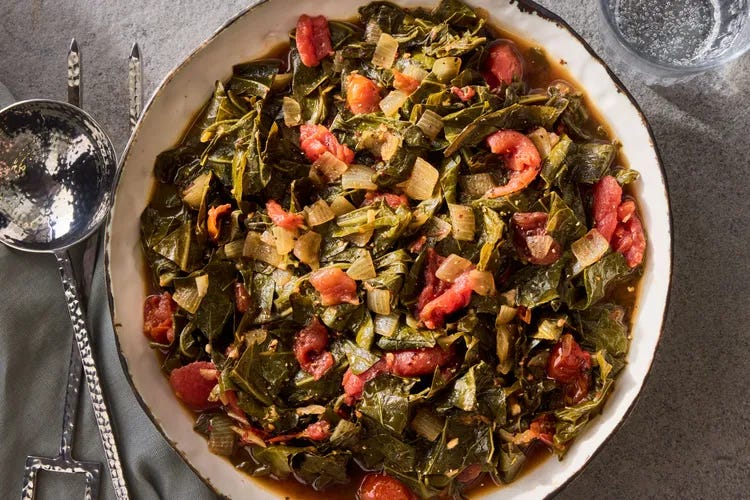
Spicy Collard Greens
Recipe - courtesy of the late Edna Lewis, Grand Dame of Southern Cooking
In the South, people tend to be loyal to one green: turnip, mustard or collard. In fact, where chef Edna Lewis was raised in Virginia, collards weren't grown at all, and to this day she maintains a prejudice against them—except in this recipe. The important thing to watch for when buying greens is that the leaves have no yellow or discolored areas. In preparing the dish, you can control the level of spiciness by adding more or less red pepper.
Ingredients
2 quarts Smoky Pork Stock
6 pounds collard greens, stems and ribs removed, leaves cut into 1-inch-wide ribbons
1/2 cup plus 2 tablespoons olive oil
3 medium onions, coarsely chopped
1 1/2 tablespoons minced garlic
1 1/2 teaspoons crushed red pepper
Salt and freshly ground black pepper
Two 28-ounce cans whole peeled tomatoes, drained
Directions
In a large enameled cast-iron casserole, bring the Smoky Pork Stock to a boil. Add the collard greens and cook over moderately high heat until tender, 30 to 40 minutes. Drain the greens, reserving the liquid.
Wipe out the casserole. Add the oil and onions and cook over moderate heat until translucent, 5 to 6 minutes. Add the garlic, crushed red pepper and 1/2 teaspoon each of salt and black pepper. Cook, stirring, for 1 minute. Add the tomatoes and 3 cups of the reserved cooking liquid and simmer over moderately low heat until the tomatoes begin to break down, about 15 minutes. Add the collard greens and cook until heated through, about 5 minutes.
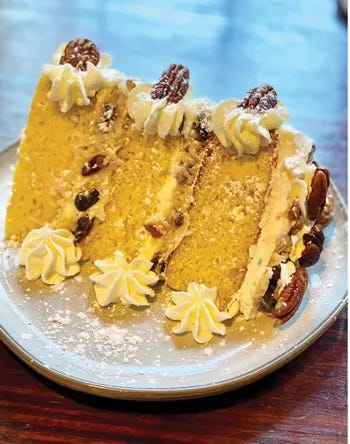
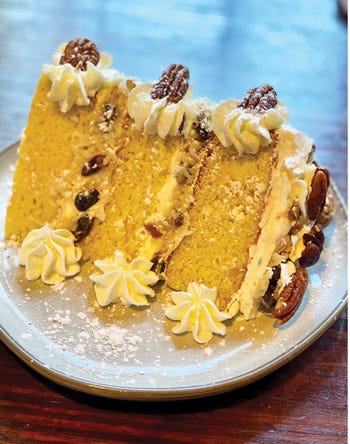
Next time you need a special cake, you cannot go wrong with Edna Lewis’ Fabulous Coconut Cake.
Edna Lewis’ Famous Coconut Cake
Serves 4-8
For the Cake:
2 cups Sugar
1/4 tsp Salt
1 Tbsp Baking powder
1 tsp Vanilla extract
1 cup Milk, room temperature
3 1/2 cups Cake flour, plus extra for pans
8 large Egg whites, room temperature
2 sticks Butter, room temperature, plus extra for pans
For the Frosting:
12 Large Egg yolks
1 1/2 sticks Unsalted Butter, melted
1 1/2 cups Sugar 11/2 cups Pecans, finely chopped
1 1/2 tsps Vanilla extract
1 1/2 cups Raisins, finely chopped
1/2 cup Bourbon
1 1/2 cups Unsweetened Coconut flakes
To make cake: Preheat oven to 325°F. Butter and flour three 9-inch cake pans; line bottoms with parchment paper. In a small bowl, sift together flour, baking powder and salt; set aside. In another small bowl, mix together milk and vanilla; set aside. In the bowl of an electric mixer on medium speed, cream butter and sugar until light and fluffy. Reduce speed and add the flour and milk mixtures in 2 or 3 batches, beginning and ending with flour.
In a separate bowl, beat egg whites until soft peaks form. Stir 1/3 of egg whites into batter. Fold in remaining egg whites until just incorporated. Pour batter into the prepared pans and bake until cakes are springy and edges slightly pull away from sides of pans—20 to 25 minutes. Remove from oven and let cool on wire racks 10 minutes. Loosen sides with a knife and invert cakes onto racks; remove parchment paper and cool completely before frosting.
To make frosting: In a medium saucepan over medium heat, whisk egg yolks and sugar together until sugar dissolves. Add melted butter, stirring constantly until thick enough to coat the back of a spoon—1 to 3 minutes. (Do not let mixture simmer or boil!) Add pecans, raisins and coconut; cook 1 minute. Remove from heat and add vanilla and bourbon; cool to room temperature before using. Spread 3/4 cup frosting between each layer of cake; use the rest for the sides and top.
There's nothing better than a good collards recipe. Thanks for sharing this one and Happy New Year!