
Fruitcake's Lasting Legacy
Defending fruitcake is a Southern sport.

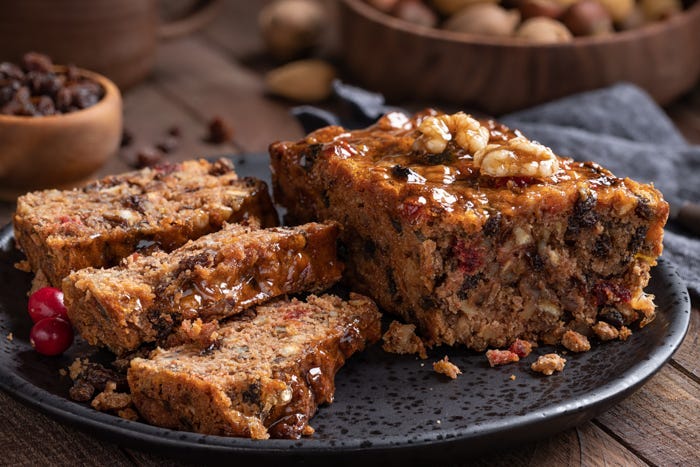
If you’ve ever attended a Southern gathering in December, you know that fruitcake will be present—whether it’s eagerly anticipated or politely endured. There it sits, resting proudly on a beautiful pedestal plate in the center of the table, right next to the deviled eggs and pecan pie, as though it were the guest of honor. Unmistakable, unchallenged—its place on the table is as secure as tradition itself.
Fruitcakes have a way of inspiring strong reactions. Guests may glance nervously at it, exchanging whispers and casting sidelong glances, as if unsure whether to approach it or simply admire it from a distance. “Well, bless its heart, it’s homemade,” Aunt Hilda would say, her tone filled with the kindness that only a Southern matriarch could muster, trying her best to put a polished spin on a cake that might double as a doorstop. But Southern hospitality knows no bounds. You don’t have to love it, but you will partake. So, you take a tentative slice, chew slowly, nod thoughtfully, and with the politeness that only Southerners can perfect, you say, “Mmm, that’s real nice. Y’all make this yourselves?”
Most fruitcakes are lovingly soaked in bourbon, rum, or moonshine, transforming them into what we consider a true Southern delicacy. We like our fruitcakes like we like our friends—wild, unpredictable, and always a little strong.
Defending fruitcake has become a Southern sport in itself. “It’s an acquired taste,” we insist, as if that somehow elevates the experience to one of refined sophistication. But in truth, it’s not so much about the flavor as it is about the tradition—the deep-rooted heritage that accompanies each slice. Fruitcake is part of the Southern Christmas charm: quirky, bold, and, in its way, timeless. The joy isn’t found in the cake itself, but in the stories it holds, the memories it evokes, and the love it represents.
Of course, those who don’t appreciate fruitcake often associate it with the mass-produced, commercially-made variety—laden with poor-quality glacéed fruits and devoid of character. But true fruitcake, lovingly crafted with care and tradition, is something entirely different. It’s the only food durable enough to become a family heirloom, passed down through generations, each recipe a link in a long chain of culinary history.
Perhaps you’ve never had a homemade fruitcake, made with the finest glacéed fruits, rich organic farm-raised eggs, and Irish butter, generously laced with rum, bourbon, or sherry. Such a fruitcake has the power to convert even the most hardened fruitcake skeptic. I was won over years ago after reading Chef Roland Mesnier’s book, A Sweet World of White House Desserts. As the pastry chef for five U.S. Presidents, he created cakes so breathtakingly delicious that their legacy continues to inspire chefs worldwide.
“The sooner fruitcakes are made, the better they will taste,” Mesnier writes. “It is almost impossible to age a fruitcake too long. They’re even better the second year.” He goes on to explain that you don’t need special pans to bake a fruitcake. It can be prepared in everything from round cake tins and loaf pans to coffee cans or even frozen orange-juice containers. But the key to fruitcake’s success is in its storage. “Fruitcakes should be stored in a cool place, but not the refrigerator,” Mesnier advises. “Cover them with cheesecloth soaked in spirits and keep them in tightly covered containers or well-wrapped in aluminum foil. Periodically, check the cakes and remoisten the cheesecloth if it has dried out. Store them in a tin or foil until a week before serving, then rewrap and sprinkle with more spirits.”
Fruitcake, with its bold and boozy charm, will always be a Southern staple—more than just a dessert. It’s a symbol of tradition, heritage, and hospitality that remains strong and unwavering. For those who cherish it, fruitcake is a piece of history, a memory encased in rich flavors and spiced sweetness, meant to be enjoyed for many Christmases to come.
So, the next time you’re at a Southern table, take a moment to appreciate that humble slice of fruitcake. It may not win any beauty contests, but it will forever hold a place in the heart of Southern tradition, where boldness and love collide in the most unexpected ways.
May you enjoy this delightful, festive fruitcake that’s as rich in tradition as it is in flavor.
The recipe below is from our Taste of Tradition cookbook. Enjoy!

White House Fruitcake
By Pastry Chef Roland Mesnier
Yields: 2 Loaf Cakes
Ingredients:
For the Fruit Mixture:
1 package (15 oz) raisins
2 cups golden raisins
1 cup currants10 oz mixed candied fruits
6 oz glazed pears, peaches, apricots, figs, and dates, cut up
1 cup candied pineapple
1 cup chopped pecans
4 oz slivered almonds
1/2 cup bourbon or port
1/4 cup brandy
For the Cake Batter:1/2 lb butter (softened)
3/4 cup firmly packed brown sugar
1/4 cup granulated sugar
2 tablespoons honey
1 1/2 cups sifted all-purpose flourGrated rind of 2 lemons
1/4 teaspoon almond extract
1/4 teaspoon vanilla extract
5 large eggs
1 cup sifted cake flour
1/2 teaspoon salt
1/4 teaspoon baking powder
1/4 teaspoon ground nutmeg
1/4 teaspoon cinnamon
For the Glaze and Frosting:12 oz jar apricot preserves
1/2 cup rum
6-8 tablespoons bourbon
1 lb confectioners’ sugar
2 tablespoons softened butter
Directions:
1. Prepare the Fruit Mixture:
In a large bowl, combine the raisins, currants, mixed candied fruits, glazed fruits, candied pineapple, chopped pecans, slivered almonds, bourbon, and brandy.
Refrigerate the mixture for at least 1-2 days, allowing the flavors to meld.
2. Make the Cake Batter:In a separate large bowl, beat the softened butter, brown sugar, granulated sugar, honey, grated lemon rind, almond extract, and vanilla extract until the mixture is smooth and well combined.
Add the eggs one at a time, beating well after each addition.
In another bowl, sift together the all-purpose flour, cake flour, salt, baking powder, nutmeg, and cinnamon.
Gradually add the dry ingredients to the wet ingredients, mixing until just combined.
Fold in the fruit and nut mixture, making sure it’s evenly distributed throughout the batter.
3. Prepare the Pans:Grease three 8 1/2 x 4 1/2 x 2 1/2-inch loaf pans.
Line the bottoms and sides of the pans with aluminum foil, then grease the foil.
Spoon the batter evenly into the prepared pans, smoothing the tops.
4. Bake the Cakes:Preheat your oven to 350°F (175°C).
Bake the cakes for 1 hour or until the centers spring back when lightly pressed. If the tops begin to brown too quickly, cover them loosely with buttered foil.
5. Make the Apricot Glaze:While the cakes are baking, place the apricot preserves in a small saucepan over medium heat.
Bring to a hard boil and simmer for about 10 minutes, stirring occasionally, until the preserves reduce and thicken slightly.
6. Finish the Cakes:When the cakes are done, remove them from the oven. While still hot, sprinkle each cake with rum.
Brush the cakes generously with the hot apricot glaze.
7. Prepare the Frosting:In a bowl, mix the bourbon with the confectioners’ sugar and softened butter to make a thin frosting.
Spread the frosting over the top of the warm cakes, allowing it to set.
Cool and Store:Let the cakes cool in their pans on a wire rack.
Once cool, remove them from the pans and peel off the foil.
Wrap the cakes in plastic wrap and refrigerate.
The fruitcake should be sliced and chilled for the best texture.Let us know if you’d like to share your favorite fruitcake recipe or story. Join the conversation!
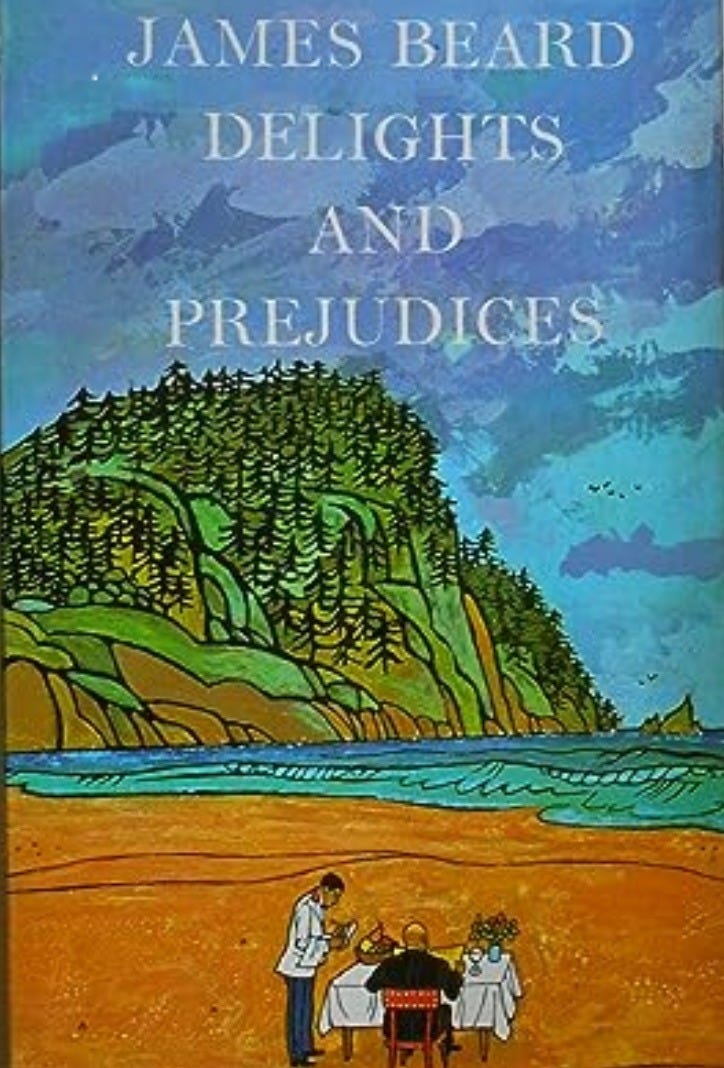
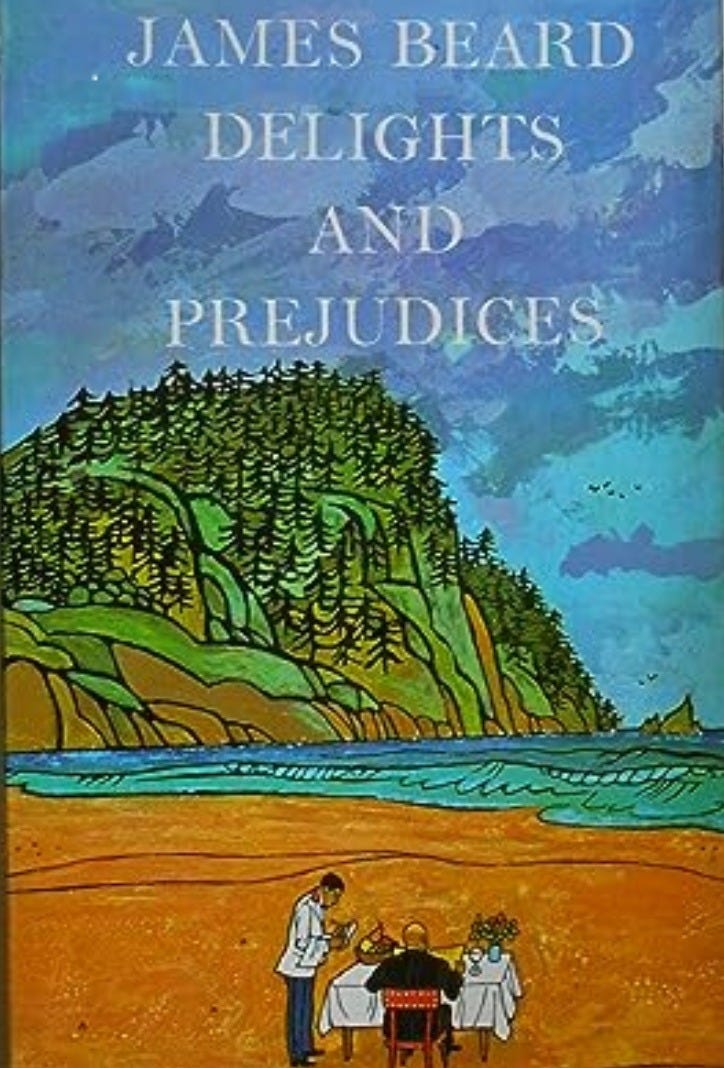
Thank you to one of our readers who wrote in to tell us about this richly evocative memoir from the man whom the New York Times dubbed the “dean of American cookery,” recalling the flavors of his past. In this culinary journey, James Beard takes us back to the earliest days of his childhood when he started developing his precocious palate and lifelong “taste memories” - the ability to savor and remember the tastes and sensations of food. This defined Beared for the rest of his life.
We made this fruitcake during Christmas and it was a big hit! Thanks for writing this story for us, and sharing it here.
“It’s fruitcake weather!”
I’m a midwesterner & my family bakes & likes fruitcake. Homemade from good ingredients is better than the cheap sawdust, glue & colored bits of plastic versions commercial bakeries make.
My family’s recipe is from The Laura Secord Canadian cookbook. James Beard has 1 or more recipes from his English mother in his book Delights & Prejudice.
One of Capote’s aunts, Marie Rudisill, wrote a little cookbook, publishing the fruitcake recipes from Capote’s cousin Sook Faulk (immortalized in his A Christmas Memory & of the fruitcake weather quote).