
Husk Restaurant: A Celebration of Southern Ingredients
A secret to making good cornbread at home.

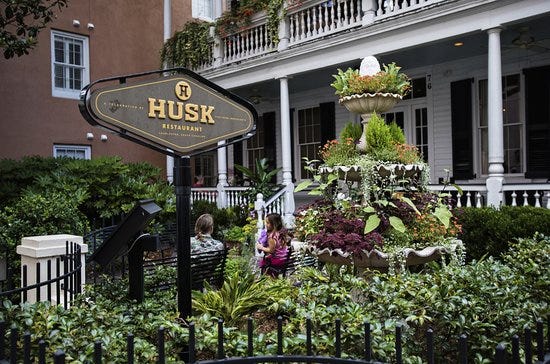
Where culinary tradition is sacred.
“I hope that someday I will be remembered for helping people everywhere understand that Southern food should be considered among the most revered cuisines of the world. These heirloom ingredients and culinary traditions are part of American history, not just the history of the South.” Chef Sean Brock
Food is medicine, after all - it can heal the soul, help mend a broken heart, or calm a busy mind.
To step onto the porch at 76 Queen Street is to enter a sanctuary where the past is not merely remembered, but honored and tasted. In the heart of Charleston’s French Quarter, where the very cobblestones seem to hum with the lingering warmth of the Carolina sun, Husk Restaurant stands as a beautifully restored sentinel of the South.
Husk's soul is defined by a strong, almost sacred dedication to the land. As founder Chef Sean Brock famously declared, “If it ain’t from the South, it ain’t comin’ in the door.” He is one of the most passionate culinary champions of the American South. This is more than just a sourcing policy; it’s a heartfelt tribute to the farmers, foragers, and watermen who have spent generations drawing flavor from the creeks and fields across the South.
Cornbread has to have the tang of good buttermilk and a cast-iron skillet with some smokin’ hot grease from Allan Benton’s smokehouse bacon. Use very high heat so hot that the batter sizzles as it hits the pan.
The allure of Southern food—the reason it is sought after by travelers from across the globe—lies in its deep connection to the soil and the stories of those who tended it.
Heritage Preservation: There is a specific emphasis on using indigenous and nearly extinct crop varieties, such as Jimmy Red corn (sourced from Marsh Hen Mill), heirloom beans, and heritage meats.
Traditional Techniques: The kitchen prioritizes authentic methods, such as using wood-fired ovens and cast-iron skillets to achieve specific textures and flavors, like the caramelized crust on their signature cornbread.
Housed in a beautifully restored Victorian-era home (circa 1893) at 76 Queen Street, the menu at Husk is a map of our heritage. Often, the menu is written daily to reflect exactly what is in season, often featuring nearly extinct varieties of corn, beans, and heritage meats.
It was an unusually hot afternoon in late August when I drove to Charleston to meet with the chef who was receiving accolades from across the country. As I walked into the kitchen, he was creating the sauce for his legendary Husk Cheeseburger. It had become so famous that it is often cited as one of the best burgers in America. It’s known for its obsessive attention to detail and nostalgia-driven flavor.
The kitchen felt like a high-functioning culinary laboratory of Southern flavor. Towering transparent containers housed heritage meats submerged in aromatic brines, while gallon jugs of house-made sauces sat in various stages of fermentation. Everywhere I looked, the shelves were a mosaic of glass jars—jewel-toned pickles and wild-foraged ingredients suspended in vinegar, all waiting for their moment on the plate.
To walk through the prep space is to see the soul of the menu in its rawest form. It’s a living library of the Lowcountry, where the air is thick with the sharp tang of pickling spice and the earthy scent of aging beef.
If you can’t snag a dinner reservation, the Bar at Husk next door is housed in a separate historic structure and offers the legendary cheeseburger and an incredible bourbon list.
This story would not be complete without a note from the late chef, author, and champion of local fresh ingredients, Edna Lewis:
"As a child in Freetown, I learned that the seasons dictated what we ate... We lived by the rhythms of the earth and respected them. That is the essence of Southern cooking." She goes on to say, “If I could not find the very best ingredients, I would rather not cook at all.”
While I was there, Chef Brock shared the secret to his famous cornbread. Here it is.
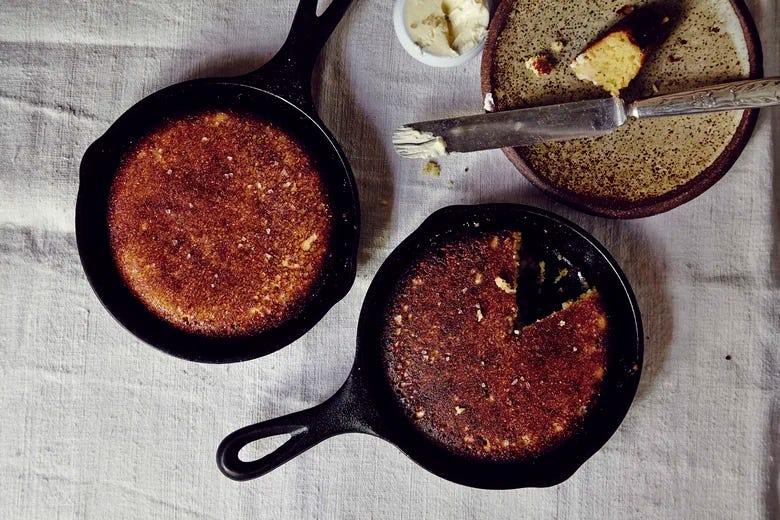
Sean Brock's Husk Cornbread
First of all: The secret to a true Southern cornbread isn't just the cornmeal—it’s the cast iron. You want that skillet screaming hot, much like the summers in the ACE Basin, so the batter sizzles the moment it hits the fat. It’s started on the stove and finished in the oven. The caramelized crust is achieved when you cook cornbread in this unbeatable way. There’s a soft crumb inside, and a tangy sourness that comes from the buttermilk. Never add flour or sugar, and use lard as the fat. Simply use the right corn, and there’s no need to add sugar. My choice is Jimmy Red cornmeal from Marsh Hen Mill in Edisto.
The resurgence of this grain was famously championed by Brock, who worked with Greg Johnsman, owner at Marsh Hen Mill, to bring this nearly extinct variety back to the Southern table.
Ingredients
4 ounces bacon
2 cups cornmeal (I use Jimmy Red cornmeal from Marsh Hen Mill, Edisto)
1 teaspoon kosher salt
1/2 teaspoon baking soda
1/2 teaspoon baking powder
1 1/2 cups whole milk buttermilk
1 large egg
Directions
1. Preheat the oven to 450°F.
2. Put a 9-inch cast-iron skillet in the oven to preheat for at least 10 minutes.
3. Run the bacon through a meat grinder or very finely mince it.
4. Put the bacon in a skillet and cook over medium-low heat, stirring frequently so that it doesn’t burn, until the fat is rendered and the bits of bacon are crispy, 4 to 5 minutes.
5. Remove the bits of bacon to a paper towel to drain, reserving the fat. You need 5 tablespoons of bacon fat for this recipe.
6. Combine the cornmeal, salt, baking soda, baking powder, and bits of bacon in a medium bowl. Set aside.
7. Reserve 1 tablespoon of the bacon fat and combine the remaining 4 tablespoons of fat, the buttermilk, and the egg in a small bowl.
8. Stir the wet ingredients into the dry ingredients just to combine; do not overmix.
9. Move the skillet from the oven to the stove, placing it over high heat.
10. Add the reserved tablespoon of bacon fat and swirl to coat the skillet.
11. Pour in the batter, distributing it evenly. It should sizzle.
12. Bake the cornbread for about 20 minutes, until a toothpick inserted in the center comes out clean. Serve warm from the skillet.
Husk serves as a reminder that the South’s culinary power doesn't come from reinvention, but from a profound respect for what was nearly lost. It is a celebration of the Lowcountry's resilience, served one plate at a time.