
Keep the Pots Boiling
And, please, no frogs allowed.

Driving across the bridge out of Beaufort and onto Lady’s Island always triggers a flood of memories—halcyon days that seem to ripen and sweeten with every passing year. Right now, the sun is descending slowly over the Intracoastal Waterway in a cinematic explosion of crimson and gold. It’s the perfect backdrop for tonight: a milestone birthday celebration for our neighbor, retired Marine Corps General Tommy Hopkins.
I cruise past historic porches glowing in haint blue; a silent, ancient promise that evil spirits aren’t welcome at this evening’s table.
As I pull into Machete Landing, the air is thick with the scent of salt marsh and anticipation. I can almost see them now: my husband and Tommy, standing knee-deep in pluff mud like backyard sorcerers. I remember the rhythmic splash as they’d scoop up the gray earth and fish meal, brewing a potent alchemy for the night’s shrimping. With eyes locked on the horizon of Trenchards Inlet, they lived for the chase. The tide might be restless, and the work back-breaking, but the Lowcountry doesn’t give up its treasures easily.
Tonight, the labor is over, and the reward is imminent. The fire is lit, the water is seasoned to a spicy roar, and soon, the feast begins. It’s time for a Lowcountry shrimp boil.
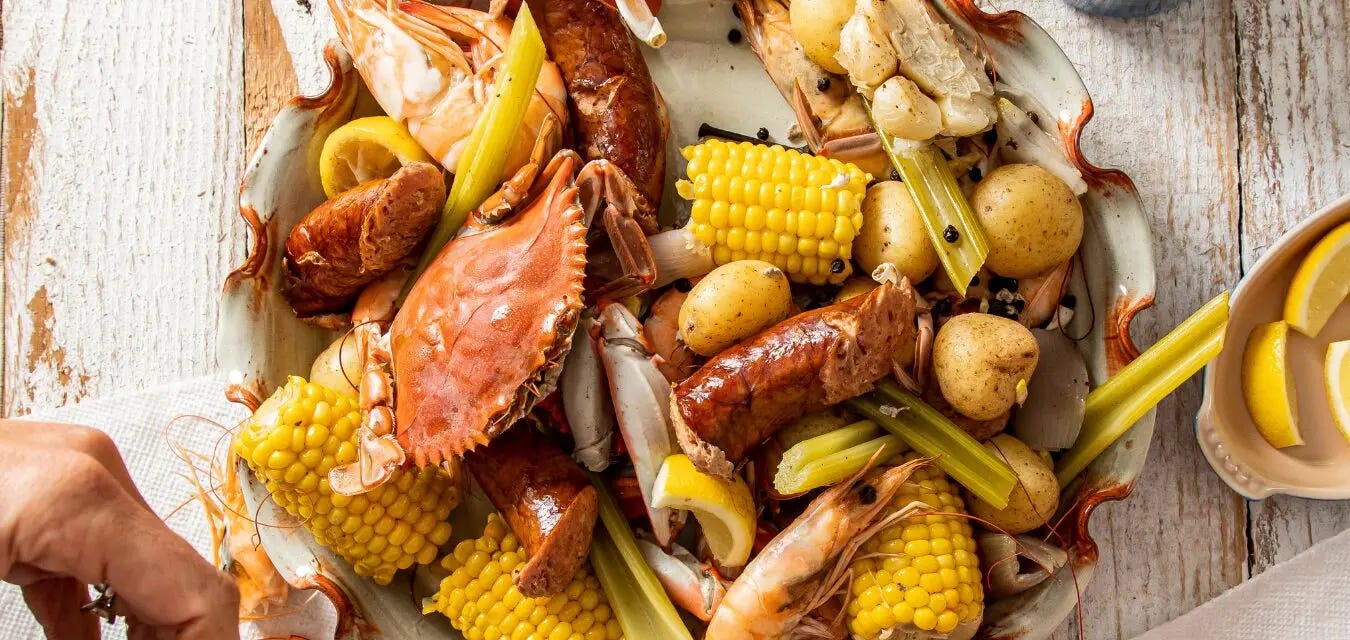
The table in the backyard, layered in newspaper like a painter’s canvas, soon became a vibrant work of art. We piled it high with steaming mounds of shrimp, sweet corn, savory sausage, and butter-soft potatoes. As the steam rose, it carried the heady perfume of Old Bay, cayenne, and the briny scent of the tidewater. In this neck of the woods, you never eat with a fork and knife. You eat with your fingers, your laughter, and an unashamed appetite.
When it comes to the ingredients, listen carefully: whatever you do, use only large, wild-caught local shrimp. Imported, farm-raised shrimp are an absolute abomination to your heritage; they won’t make your mama proud, and they certainly won’t pass muster at Machete Landing.
And let’s be clear for the uninitiated: Frogmore Stew may carry the name, but don’t you dare think a frog has a single thing to do with it. If anyone shows up with a bullfrog, we’ll hand them a to-go plate and point them toward the nearest pond. The only thing leaping at this table is the joy of grabbing seconds before the platter is picked clean.
The truth is, a shrimp boil isn’t just a meal—it’s a peace summit. It’s hard to hold a grudge when your hands are messy, and your heart is full. Nobody can stay mad with a mouth full of shrimp, and by the time the sun has fully dipped below the horizon, everybody leaves a little lighter and a lot happier than when they came.
Frogmore Stew
Serves 6
6 cut-in-half ears of corn on the cob
6 (4-inch) links of smoked sausage
12 large red new potatoes cut in half
3 pounds of unpeeled fresh, local shrimp
A half dozen blue crabs, scrubbed clean of sand and debris; once cooked, shells should be bright red-orange
1 box Zatarain’s Crawfish, Shrimp, and Crab Boil seasoning
Here’s how it must go: Fill a large pot with enough water to cover all the ingredients and bring it to a boil. Add the box of seasoning. Once the water is boiling, add the red potatoes and the sausage. Cook on medium heat for 20 minutes. Add corn and blue crabs and cook for an additional 8-10 minutes. Give everything a gentle stir to make sure it cooks evenly.
Get another rolling boil going and dump in the shrimp. Cook for one minute and give the pot another stir. This is where things get very critical. With boiled shrimp, a few seconds late can spell disaster. When the first shrimp turn pink and float, turn off the heat and drain the pot.
Next, dump the entire pot onto a table lined with layers of newspaper. Finally, step back and admire the mountain of your awesome creation.
Hit the Subscribe button and never miss a story or a recipe. May these tales of the Lowcountry resonate in the hearts of all who pass this way. This is authentic Lowcountry - tributes to the land we love.