
The Blue Ceiling in the Carriage House
Uncovering the invisible lives behind Savannah's grandest facades.

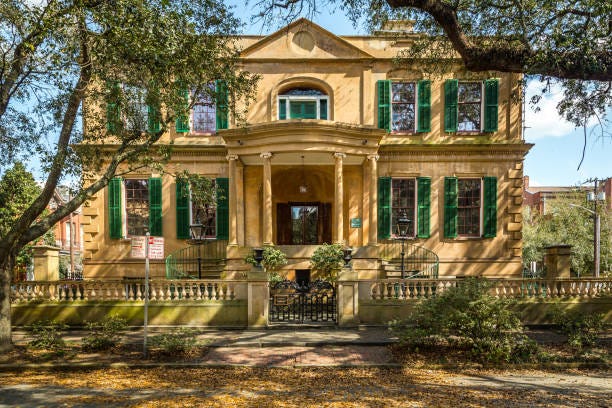
To find where the enslaved lived in pre-Civil War Savannah, you have to look past the “hostess city” charm. You have to go to the oldest corners of town, locate the grandest mansions, and walk around to the back.
It was a crisp winter day when I decided to wander through the downtown historic district. The antebellum homes here are breathtaking—monuments of brick and stucco that housed the 30 percent of Savannah households who owned enslaved people in the mid-19th century.
But for decades, the stories told inside these homes were incomplete. They would tell stories of neoclassical tea sets and gilded banisters. The people who polished those banisters were kept on the margins of the tour, and their history was never to be mentioned.
The Prohibition that Failed
In the colony’s earliest days, Georgia’s founder, James Oglethorpe, actually banned slavery. He feared it would make Georgians “less industrious.” It was a radical stance for the 1700s South, but it didn’t last. The ban was ardently opposed and, eventually, patently ignored.
By the time the prohibition was lifted in 1750, the floodgates opened. Savannah became the port of entry for nearly every enslaved person in the colony.
Ellis Square became a site for auction blocks.
Johnson Square housed holding pens.
The Fortunes of famous families, like the Habershams, were built on the Atlantic slave trade.

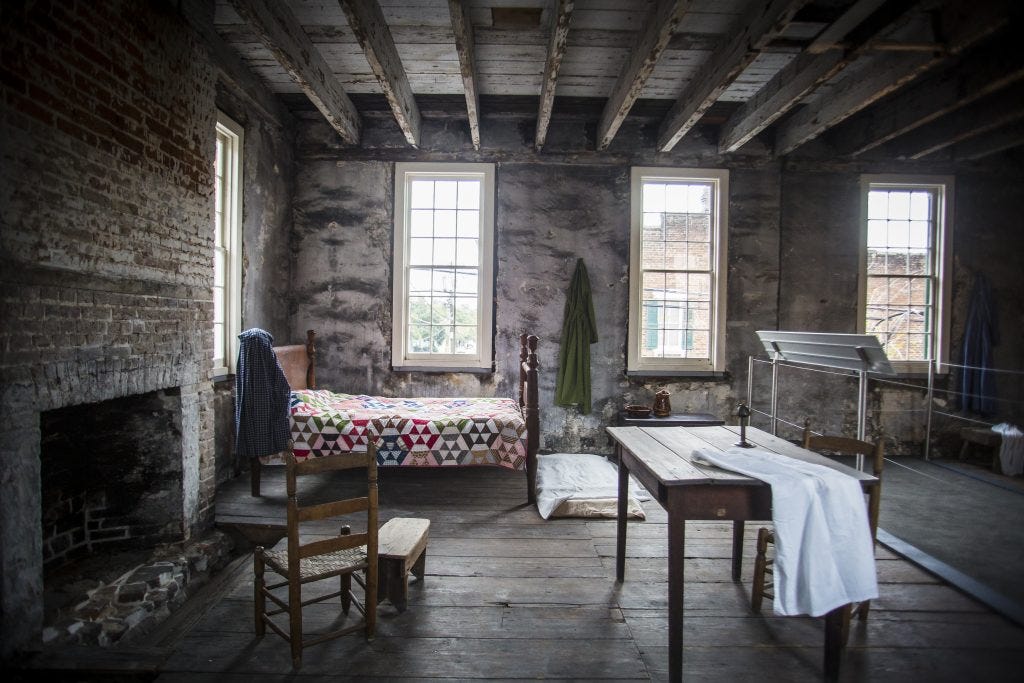
slave bedroom
“What Do We Do?”
The Owens-Thomas House & Slave Quarters has been open to visitors since 1954, but it spent over 40 years hiding its most significant feature in plain sight.
In 1990, the museum’s carriage house was being used as simple apartments. When the tenants moved out, the museum planned to renovate the space into administrative offices. Shannon Browning-Mullis, a curator for the Slavery and Freedom in Savannah project, describes the moment the “office” plan died:
“They started to pull down the drop plaster ceilings and take out walls, and they realized that the original fireplaces, ceilings, and floors were still intact. They paused everything and said: ‘We have the space. It’s still here. What do we do?’”
They had stumbled upon one of the oldest and best-preserved urban slave quarters in the American South.
The most haunting detail? A chipped layer of haint blue paint still clinging to the ceiling beams—hand-mixed with indigo and lye by enslaved people to ward off spirits.
Giving Back the Names
For over half a century, the tours here didn’t mention that the home’s owners were human traffickers.
Richard Richardson (1819) made his fortune shipping children from Savannah to New Orleans.
George Welshman Owens (1833) owned 400 people across his plantations.
The Slavery & Freedom Project changed the narrative. They didn’t just rename the site; they did the “private eye” work of digging through jail records, ship manifests, and death itemizations to find the people the records tried to erase.
The Power of Names
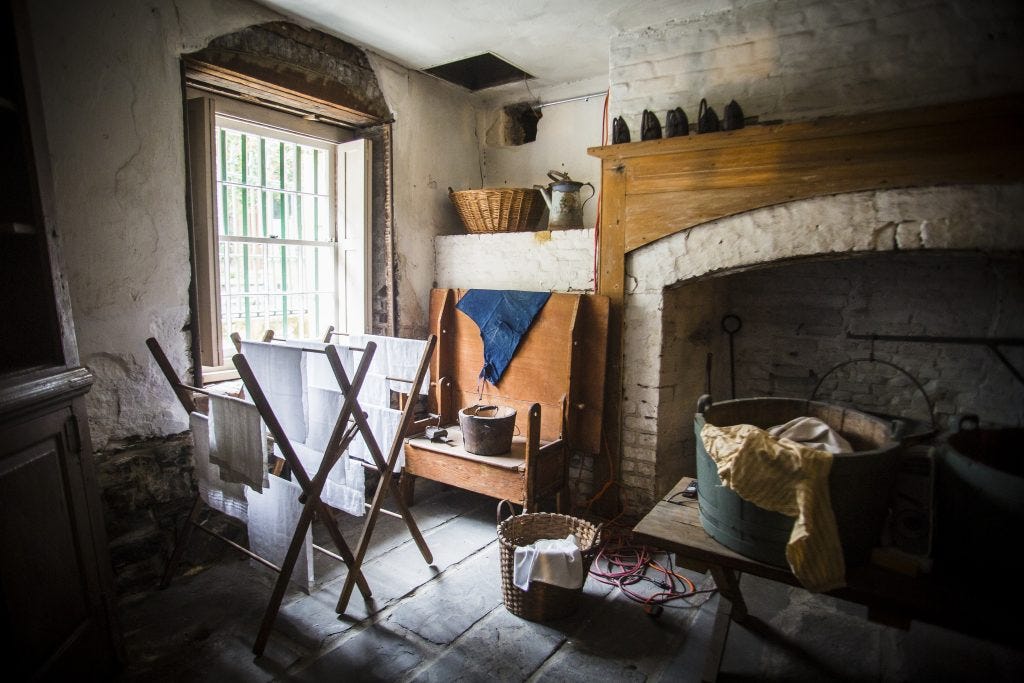
Today, when you walk through the basement, the kitchen, or the scullery, you aren’t just looking at architecture. You are meeting Emma, the nanny; Diane, the cook; and Peter, the butler. By giving them their names, we pause and begin to see them as real people.
Why This Matters Now
The Owens-Thomas House has joined a small but vital group of historic homes—like The Hermitage and Monticello—that are finally telling a truthful story. They are moving away from the “Lost Cause” mythology and toward a complete national identity.
We are never too old to pick up a deeper knowledge of our surroundings. The next time you walk through a Savannah square or down a moss-draped lane, look at the big houses. Then, look just a little bit closer at the walls behind them and think of Emma, Diane, and Peter.
Scullery and Kitchen
To truly understand the era of the Owens-Thomas House, you have to look at the Scullery and Kitchen. While the wealthy family in the dining room ate French-inspired delicacies, the kitchen was the domain of women like Diane, the cook, who blended West African traditions with local Lowcountry ingredients.
A Note on the Ingredients: In Savannah, the enslaved cooks were the masters of the "one-pot meal." While the Owens family might have had this served as a side dish to roast beef, for those living in the carriage house, a pot of red rice enriched with scraps of pork was often the main event—a taste of home and heritage surviving under the harshest conditions. One of the most authentic and enduring recipes from 19th-century Savannah—found in both the “Big House” and the quarters—is Savannah Red Rice.
This dish is a direct descendant of West African Jollof rice, brought to the Georgia coast by enslaved people from the Rice Coast of Africa.
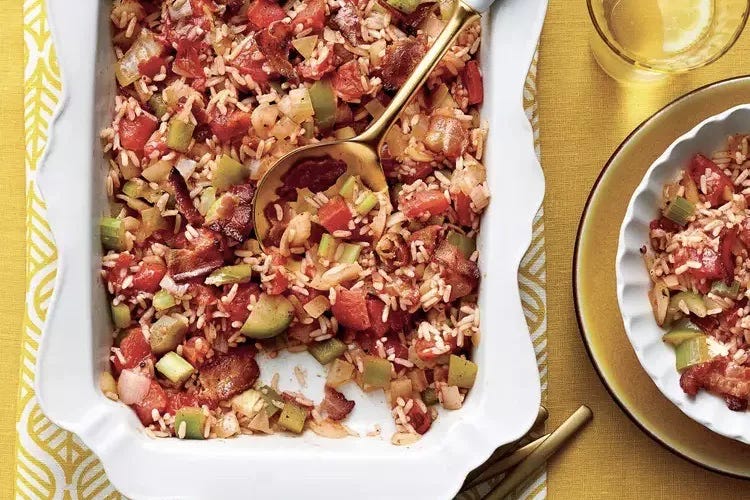
The Recipe: Lowcountry Red Rice
Yields 4–6 servings
In the 1800s, this would have been cooked in a heavy cast-iron pot over a hearth. The key is the “crust” at the bottom of the pot, which was often the most sought-after part.
Ingredients
2 cups long-grain white rice (historically, this would be Carolina Gold)
4 slices thick-cut bacon or salt pork, diced (used for the “pot likker” flavor)
1 medium yellow onion, finely diced
1 green bell pepper, diced (The “Holy Trinity” of the Lowcountry)
2 cloves garlic, minced
1 can (15 oz) crushed tomatoes or tomato purée
1 cup chicken stock or water
1 tbsp Worcestershire sauce
1 tsp smoked paprika (to mimic the hearth-smoke flavor)
Salt and black pepper to taste
Optional: A pinch of cayenne or red pepper flakes (for the “heat” favored in African cooking)
Instructions
Render the Fat: In a large heavy skillet or Dutch oven, fry the bacon or salt pork over medium heat until crisp. Remove the meat with a slotted spoon and set aside, leaving the rendered fat in the pan.
The Aromatics: Sauté the onion and bell pepper in the fat until soft (about 5–7 minutes). Add the garlic and cook for just one more minute until fragrant.
The Base: Stir in the crushed tomatoes, stock, Worcestershire sauce, paprika, and spices. Bring the mixture to a simmer.
The Rice: Add the rice and the reserved bacon bits. Stir well to ensure every grain is coated in the tomato base.
The Steam: Cover the pot with a tight-fitting lid. Turn the heat to the lowest setting. Let it cook undisturbed for 20–25 minutes.
Note: In the 19th century, they would often finish this in a slow oven to keep the rice fluffy and prevent it from getting “mushy.”
The Finish: Turn off the heat and let the pot sit, covered, for another 10 minutes. Fluff with a fork—the rice should be red, savory, and each grain should be distinct.