
The Essence of the Lowcountry
A taste of the tide with every bite.

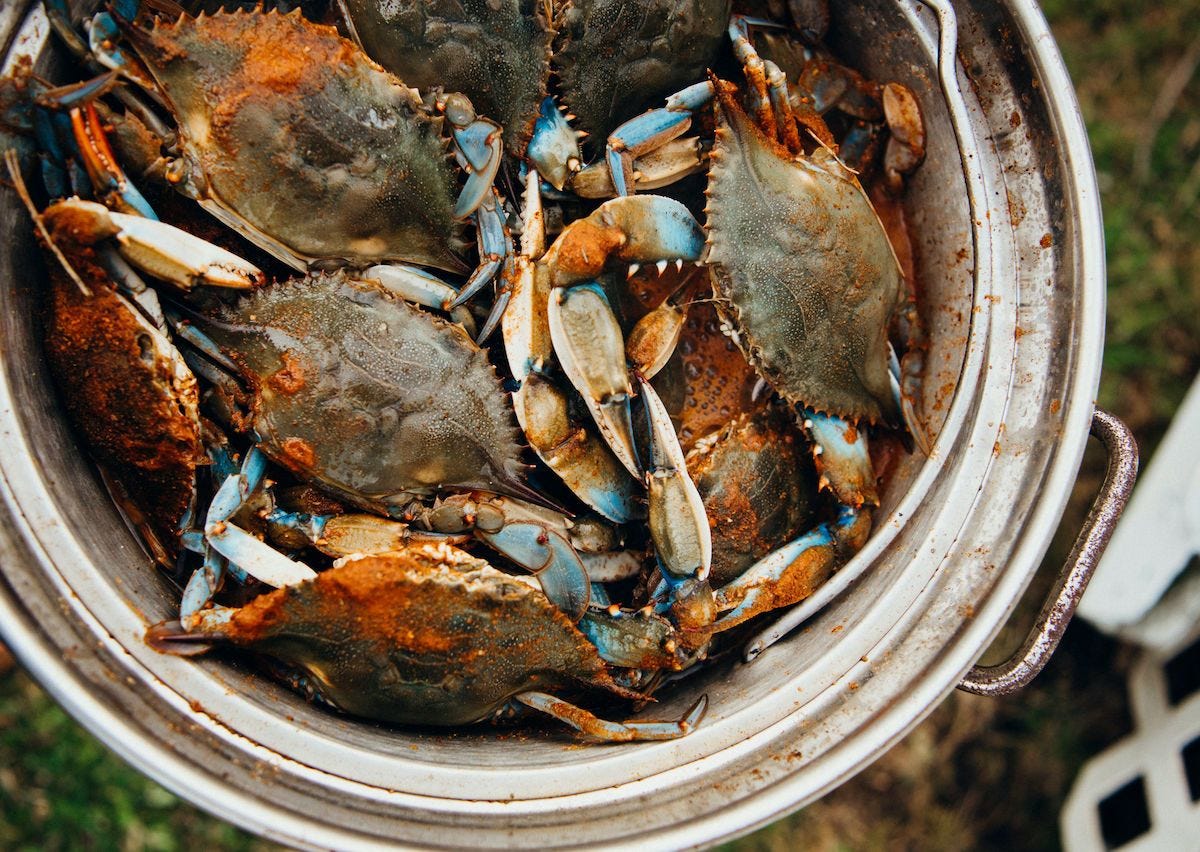
If there is one creature that captures the soul of the South Carolina Lowcountry, it’s the blue crab—a feisty little beauty with indigo claws, a sandy disposition, and a flavor that tastes like tidal creeks and summertime afternoons. You can have your pompano, your oysters Rockefeller, your chef-tweezed tuna tartare. But the blue crab? That’s home.
It always has been.
The first thing you notice is the sound. Not the cry of gulls or the soft slap of water against a tide-worn dock, but the steady tap-tap-tap of practiced hands at work. It echoes off the concrete tables inside the Bluffton Oyster Company, where sunlight slants in through old screen windows and catches the steam rising from freshly cooked blue crabs.
This is where the story of the Lowcountry begins—not in a grand dining room in Charleston, not in a glossy magazine spread, but right here among the women who have picked crab longer than most of us have been alive. Their hands move so fast you almost miss the grace in it, the rhythm of a trade carried down through generations until they became the last ones keeping it alive. The youngest among them might be seventy. Their knowledge is bone-deep.
The blue crab is South Carolina's first true taste, the flavor that immediately tells you your location the moment it touches your tongue. Sweet, delicate, and unmistakably connected to our tidal creeks and salt marshes. It’s the seafood you won’t see dressed up with fancy adornments or fuss in the white-tablecloth restaurants that attract people to Charleston. Blue crab isn’t always suited for elegance. It resists refinement.
To eat it, you have to get a little messy.
To understand it, you have to get close.
To appreciate it, you have to know the people who have spent their lives coaxing its treasures from the shell.
In the Lowcountry, blue crab isn’t a trend or a culinary experiment. It’s a way of life. Generations of families have caught them, steamed them, picked them clean, and gathered around tables covered in newspaper to savor every bite. Crab boils, creekside suppers, fish camps where the scent of Old Bay lingers in the air—these are the moments that have shaped our coast far more than any polished menu or fashionable eatery.
But times are changing. Few people want the work anymore. Crab picking is backbreaking, painstaking, and the pay rarely matches the skill. Bluffton Oyster Company may be the last place in South Carolina where the entire process—harvesting, cooking, picking—still happens under one roof. That alone makes the blue crab something close to sacred.
And maybe that’s what keeps us coming back to it: this simple, humble creature with claws the color of a storm-touched horizon, offering its sweet meat to anyone willing to put in the effort. The blue crab anchors us to a landscape that is always shifting—tides rising, marshes breathing, seasons turning.
It tastes like memory.
It tastes like home.
And it reminds us that the story of the Lowcountry has always been written in saltwater, in quiet labor, and in the hands of those who keep its oldest traditions alive.
Below is my most requested recipe for blue crab from the Tides of Tradition online cookbook, a fabulous appetizer for your holiday gatherings. Become a paid subscriber and never miss a recipe or a story. Enjoy!
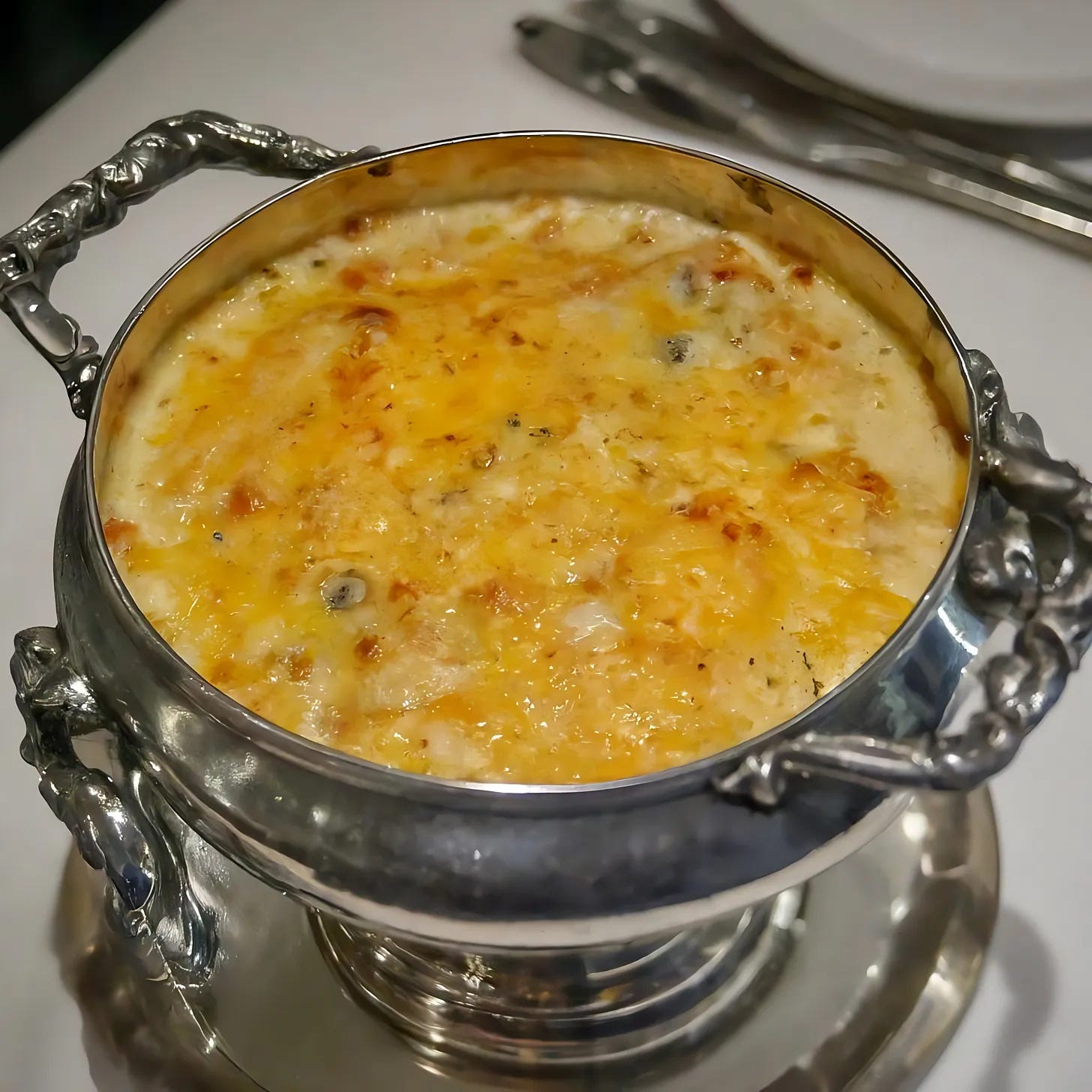
Beaufort Crab Au Gratin
This is a timeless recipe served at parties and gatherings for decades. A tried and true popular recipe.
1pound cooked lump or claw meat picked over for cartilage
3 tablespoons, plus one teaspoon butter
½ cup shallots, finely minced
3 tablespoons all-purpose flour
3 cups half-and-half or cream
2 tablespoons dry sherry
Kosher salt to taste
A pinch of cayenne pepper
whole nutmeg, grated to taste
2 tablespoons freshly grated Parmigiano-Reggiano cheese
¼ cup fine cracker crumbs
1 cup extra-sharp cheddar cheese, grated
Pick over the crabmeat for any bits of shell or cartilage and discard them.
Put 3 tablespoons of butter and the shallots in a heavy-bottomed pan over medium heat. Sauté, stirring almost constantly, until the shallots are softened but not colored, about 3-4 minutes. Sprinkle in the flour and cook, stirring constantly, for 1 minute.
Slowly stir in the half and half or cream and bring it to a simmer, stirring constantly, then reduce the heat to medium-low and cook until thick, about 3 minutes. Add the sherry, return to a simmer, and turn off the heat.
Position a rack in the upper third of the oven and preheat to 400 degrees. Lightly butter a 1 ½ to 2-quart shallow casserole dish. Fold the crab gently and Parmigiano into the sauce, trying not to break up any lumps of crab. Season it to taste with salt, cayenne, and nutmeg, and put it into the casserole dish. Level the top with a spatula.
Melt the remaining teaspoon of butter in a small skillet over low heat. Stir in the cracker crumbs and toss until the butter is evenly absorbed. Turn off the heat. Sprinkle the grated cheddar evenly over the top of the casserole and top with crumbs. Bake until bubbly, and the cheese is melted about 15 minutes. Serve hot.
Chef’s Note:
Here’s a trick on the simplest, quickest way to remove bits of crab shell from crab meat. Lay the crab meat out on a cookie sheet and heat the oven to 250 degrees. The bits of shell and cartilage will turn white, and you can easily pick them out with either your fingers or a pair of tweezers.
This looks luscious.