
The Lone Gullah Oysterman
Whatever struggles led him to the water's edge remain a mystery.

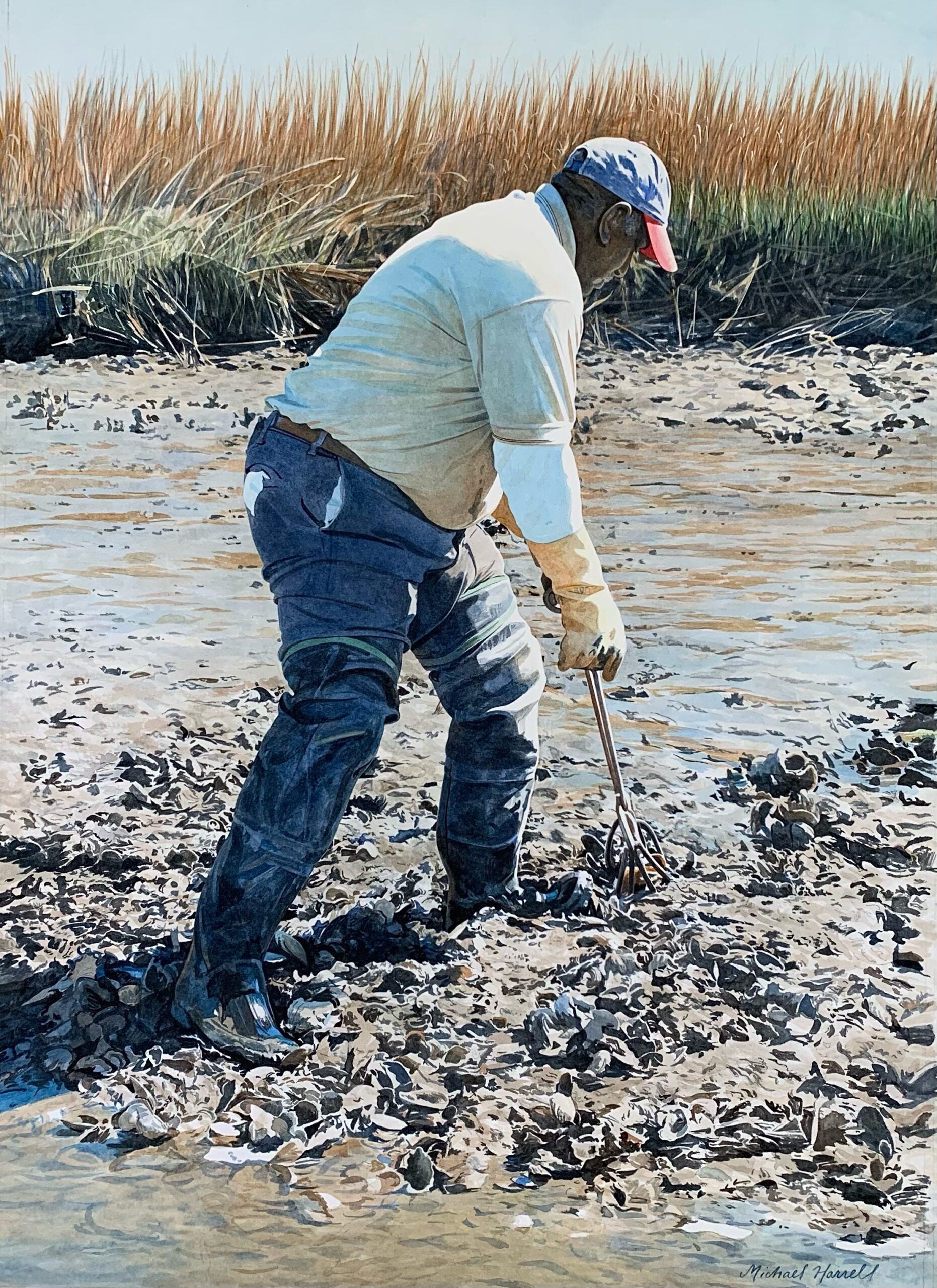
Dawn was breaking as I arrived at the Eddings Point Landing on St. Helena Island.
I lingered at the landing to watch a lone oysterman launch his bateau, pulling my wool scarf up around my neck, holding it tight against the wind. In the salt marshes and winding rivers along our coast, only a few rugged souls still make their living gathering oysters. On this island, most are Gullah—descendants of enslaved people who continue to practice the skills and traditions of their ancestors.
An Eddings Point morning awakens at its own patient pace as the oysterman pushes his wooden bateau off the mudflats toward distant channels. He navigates through streams and secret places known only to him and God. The unspoiled waters hold their mysteries close, yet the shoreline’s nooks and crannies will eventually yield the mighty river’s jewels.
As his bateau slips into the morning fog, it carries my imagination with it. He is one with the river and one with his boat—at home within himself and his way of life. Long ago, he embraced the waterman’s path, a life of hard, entrepreneurial labor spent amid chilling, choppy waters.
To harvest a wild bushel of those muddy, jagged oysters—so essential to a true Lowcountry roast—requires hours of standing bent against the elements, swinging a metal rod to crack apart large clusters. Whatever struggles led him to the river’s edge remain a mystery, masked by the gentle ripples of the tidewater as it travels toward the distant horizon.
Since ancient times, the river’s ebb and flow has shaped and reshaped life along the great salt marshes of Beaufort County. Those who live close to the water’s edge understand the profound wealth these rivers provide.
Early settlers carved dugouts from cypress logs and gathered oysters by hand, and little has changed over the centuries. Our oystermen gather today in much the same manner as their forefathers. Their bateaux, built mostly before the 1990s, are as rugged and river-worthy as the men who crafted them.
Averaging 16 to 20 feet, they were made to withstand running aground over and over on rough-shelled river banks. Their long, broad shape let them haul enormous loads of oysters, 40 to 80 bushels at a time. If close enough, harvesters rowed out and back to shore by themselves. If not, sailboats towed and released them one by one beside oyster beds and returned on the incoming tide.
Years ago, fleets of crisp, white-sailed sloops, each with its string of trailing bateaux, were a common sight. As years passed, boats with engines took their place, pulling 10 to 15 bateaux.
Strong men loaded their oysters with knowledge and skill to avoid tipping or sinking in the incoming tide’s choppy waters. Proud men who had watched their fathers and grandfathers go out into these same rivers, the Colleton, Combahee, Broad, Okatie, and Chechessee, ventured out to find quiet places known only to them.
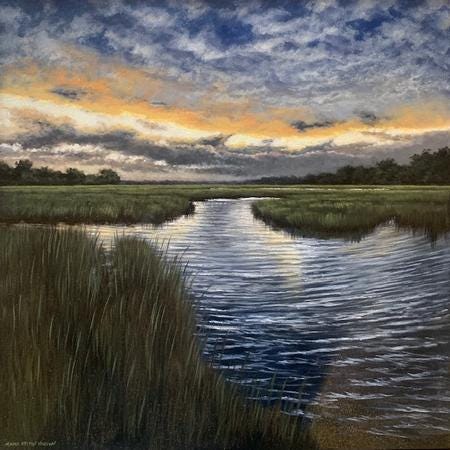
I know men in whiteboots have waged war in these waters—wars against the elements of nature. Bitter, hard winter winds created almost impossible conditions at times. Often working alone with the only sound that of cast-iron claw tongs crunching into oysters, men would lean, take a few steps, lean again, reaching into the mudflats, not just for any oyster, but for the prize, as generations had done before them.
Outside the oyster house, hardscrabble women would gather as their oystermen returned on high water with loaded bateaux. Their whitewashed cinder block structures stood at the river’s edge, ready to receive the bounty while seagulls’ cries pierced the chill of late afternoon air. Mounds of bleached shells surrounded the oyster shucking house, a testament to what was to begin. Ladies with small, tempered knives and wooden-handled hammers waited patiently. Shovel loads of oysters were soon heaved onto long cement tables.
Women standing on cinder blocks, oysters shoveled in front of them, chatted before the crescendo of hammers opening shells began. Rugged Gullah women spent long days in the oyster house where their ancestors knew hardship and how to earn an honest wage. Listen as you head down Wharf Street in Bluffton on most any winter afternoon, and you may hear gospel hymns rising in the air. Just as their ancestors sang hymns in the fields of long ago, the women follow in their footsteps, passing time by praising the Lord.
Most of the men who worked to tidal rhythms are old. Their sons and grandsons long ago left these Sea Islands just as the women who shucked oysters soon will have no one to follow them. Women waiting at water’s edge for oyster-laden boats? Those images are soon to be washed away with the tide.
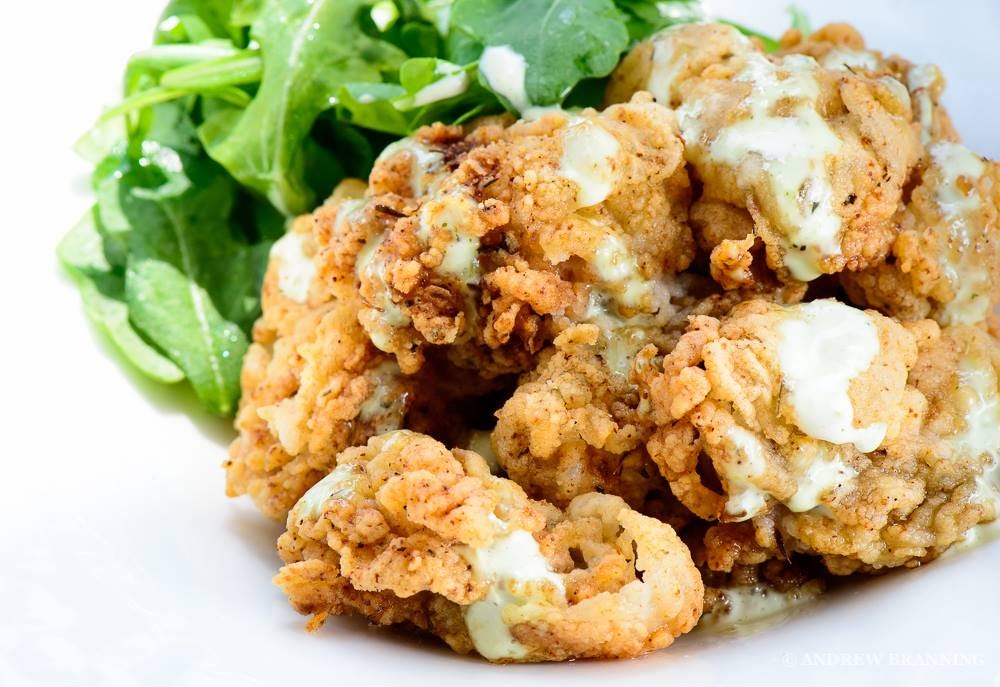
Fried Oysters have long been a favorite in the Lowcountry. I have a recipe I must share from Chef Forrest Parker in Charleston when he was at the Vendue.
Subscribe and never miss a recipe. Thanks for stopping by. Bon appetit!
