
Vintage Vittles
Downright delicious "desperation pies" are making a comeback!

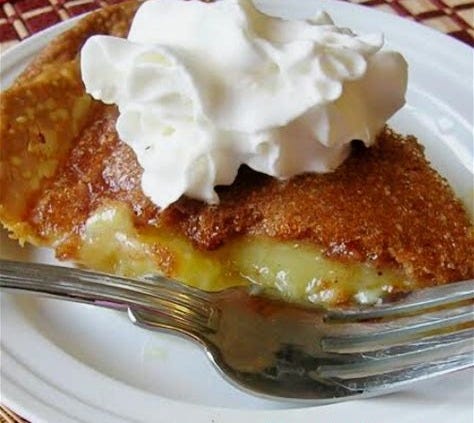
“Desperation pie” may sound alarming, but these vintage desserts are downright delicious!
“As God is my witness. I’ll never be hungry again.”
Scarlett O’Hara in ‘Gone with the Wind’
You may not have heard the term “desperation pie” before, but odds are you’ve eaten one. If you’ve ever had vinegar pie, chess pie, or shoofly pie…they’re all desperation pies. Otherwise known as “make-do” pies, these pies were what grandma and great grandma made from common pantry items when they couldn’t get fresh fruit.
Forget everything you know about modern grocery aisles, where strawberries appear in January as if by magic. Step back to a time when your kitchen was a battlefield, the seasons were your enemy, and "dessert" was a daring act of survival! During the Great Depression, there were those who were hungry and had to be resourceful.
Imagine it’s the tail end of a brutal 18th-century winter. Your fruit cellar is a graveyard of empty jars. Your family is craving something sweet, but all you have is a jug of vinegar, some dusty flour, and a prayer.
Enter the Desperation Pie. These weren’t just recipes; they were culinary alchemy. Grandma didn’t need a harvest to create a masterpiece—she used her wits to turn “nothing” into “everything.”
These pies are born from sheer grit and pantry staples.
More Than a Meal—It’s a Legacy
While these pies became legends during the Great Depression and World War II rationing, they were actually perfected by agrarian pioneers as far back as the 1740s.
Before refrigeration and high-speed trains, “desperation” was the mother of invention. Every bite of these pies is a tribute to the resourceful cooks who refused to let a long winter or a lean pantry keep them from the joy of a flaky crust and a sweet filling.
They may have been called "make-do" pies, but one taste will tell you they are anything but second best.
Of course, the biggest reason these pies are seeing a comeback is simply that they’re delicious, and everyone loves discovering something so tasty! Necessity is the mother of invention, after all, and these pies show culinary invention at its best.
Become a Guardian of Southern Culinary History
Every story I share is a brick in the wall protecting the heritage of the South. To help me keep this history alive and ensure this “visual heartbeat” never fades, please consider upgrading to a paid subscription. Together, we can preserve the soul of this region through art and story.
From today’s Vintage Kitchen - Desperation Pies: (recipes below)
Shoo, Fly Pie
Legendary Vinegar Pie
Cinnamon Sorghum Custard Pie
Shoo, Fly Pie is considered a "desperation pie"—a dessert made from pantry staples like molasses, flour, and brown sugar when fresh fruit wasn't in season.
Most food historians trace the pie back to 1876. It is believed to have evolved from a “Centennial Cake” created in Philadelphia to celebrate the 100th anniversary of the Declaration of Independence.
Because the cake was crumbly and sticky, home cooks began baking it in a pie crust to make it easier to eat by hand, especially for farmers taking it into the fields. By the 1880s, it had fully transitioned from a cake into the pie we know today.
The "Shoo, Fly!" Theory: The most popular legend says that because the pie is made of sweet, sticky molasses, it would attract flies while cooling on windowsills. Bakers would have to constantly "shoo" the flies away.
Because Shoofly pie relies on shelf-stable ingredients (molasses, lard/butter, and flour) and originally didn’t even require eggs, it became the go-to winter dessert for pioneers and farmers. When the fruit cellars were empty at the end of a long winter, “desperation” led to the creation of this rich, spiced masterpiece.
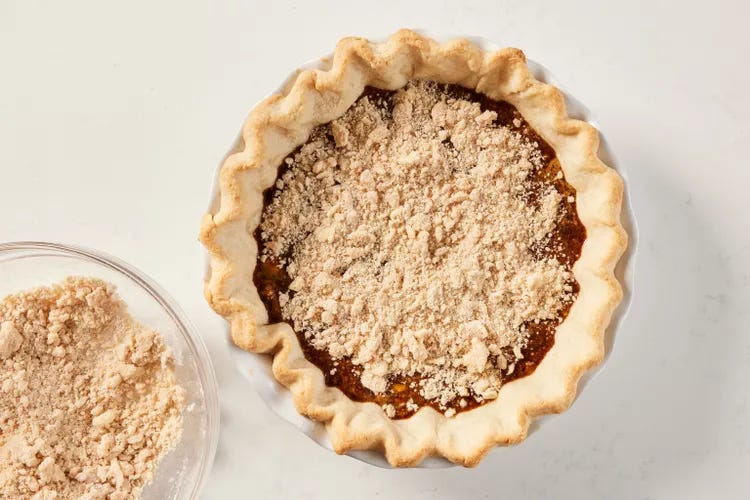
Shoo, Fly Pie
1 single-crust pie shell - Instructions below
Ingredients
1 1/2 cups (6 3/8 oz.) all-purpose flour
1/2 cup brown sugar
1/2 tsp. ground cinnamon
1/4 tsp. kosher salt
1/2 cup (4 oz.) cold unsalted butter, cubed
1 cup molasses
3/4 cup boiling water
1 tsp. baking soda
1 egg, lightly beaten
Whipped cream for garnish, optional
Pie Crust
Place the crust inside a greased 9-inch deep dish pie dish. Cut excess dough, leaving a 1/2-inch overhang. Preheat oven to 425 degrees. Fill the pie shell with dried beans.
Fold overhang under itself, creating a thicker ring of crust around the pie's edge. Crimp edge as desired. Chill in refrigerator until firm, about 30 minutes.
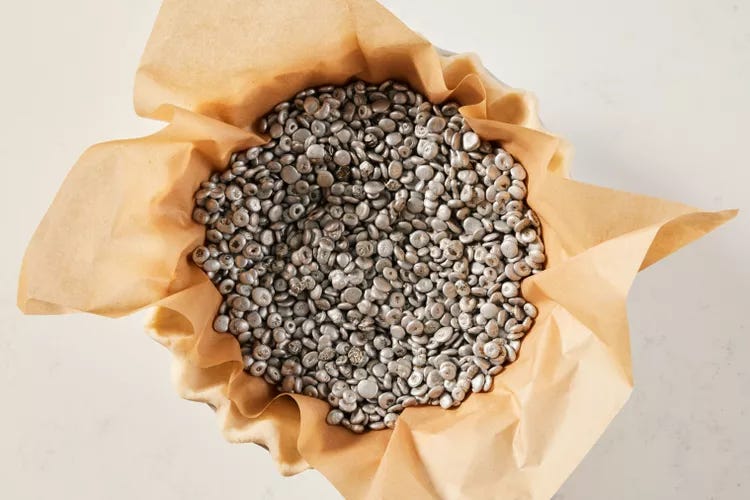
Bake in preheated oven on lower rack until edges are golden, about 15 minutes. Remove parchment and pie weights; continue baking until lightly golden, about 5 more minutes. Cool on a wire rack to room temperature, about 30 minutes.
Make pie filling:
Decrease oven temperature to 350 degrees. Stir together flour, brown sugar, cinnamon, and salt in a medium bowl until all ingredients are evenly distributed.
Add butter:
Add butter and using your hands or a pastry cutter, and incorporate butter into dry ingredients until no pieces of butter remain and the mixture resembles cornmeal. Set aside.
Make molasses mixture:
In a separate bowl, whisk together molasses, boiling water, and baking soda until molasses is fully dissolved. Once cooled down, add beaten egg and whisk to incorporate.
Fill the prepared crust by adding 1/3 cup of flour mixture first:
Using a ladle or a measuring cup with a handle, gently scoop or pour the molasses mixture into the pie shell.
Finish pie topping:
Sprinkle the reserved flour mixture evenly across the entire surface of the pie.
Bake pie:
Bake in a preheated oven until the center of the pie is set, about 40 minutes. Cool completely on a wire rack, about 2 hours. Serve at room temperature with whipped cream, if desired.
…………………………………………………………………………………………………………………………………
This is the one that truly feels like magic because it uses a sharp, savory liquid to create a bright, fruity dessert!
The Legendary Vinegar Pie
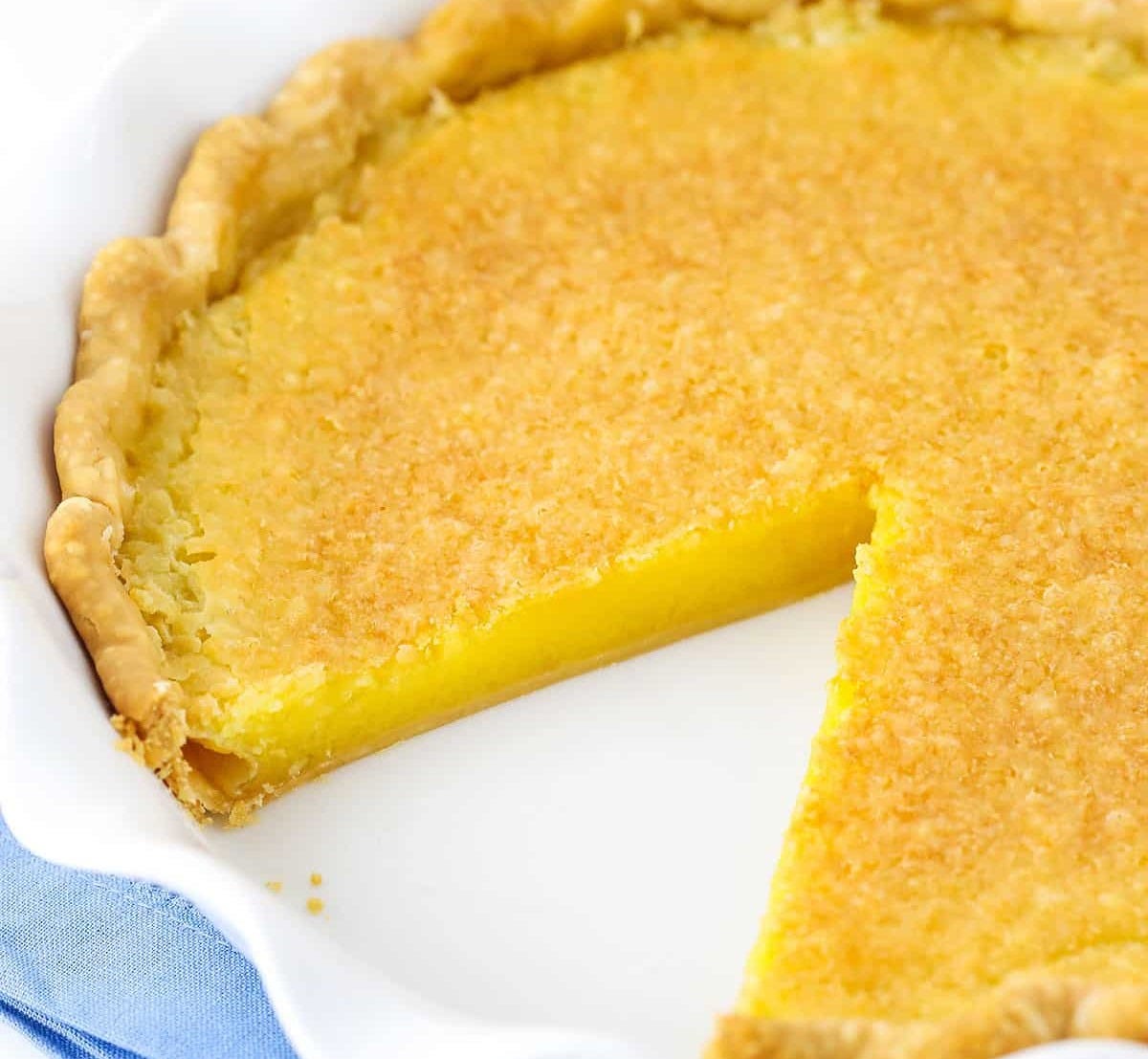
Commonly known as “Mock Lemon Pie,” this recipe was a lifesaver for pioneers who didn’t have access to citrus trees. The vinegar provides a sharp tang that, when baked with sugar and eggs, mellows into a flavor remarkably similar to lemon custard.
This pie became very popular during the Great Depression when fresh fruit was scarce. Despite its name, vinegar pie does not taste strongly of vinegar. It has a lovely mild lemon flavor.
This Vinegar Pie is a super simple, old-fashioned pie that’s been around for years! It gets its flavor from a little bit of vinegar and is topped with whipped cream and a sprinkle of nutmeg!
Ingredients
1 refrigerated pie crust
4 large eggs
1 1/2 cups (310g) sugar
1/4 cup (56g) butter, melted
1 1/2 tbsp white vinegar
1 tsp vanilla extract
whipped cream, optional
Nutmeg
Instructions
1. Place the pie crust in a 9-inch pie pan and crimp the edges. Pre-bake according to the package directions for temperature and time. Use pie weights to keep the crust from puffing up too much when baking.
2. Adjust oven temperature to 350°F, if needed.
3. In a large bowl, combine the eggs, sugar, butter, vinegar, and vanilla extract. Whisk well to combine, then pour into pre-baked pie shell.
4. Bake pie for 30-40 minutes, or until pie is set but a little jiggly.
5. Allow pie to cool to room temperature, then refrigerate pie until cool and firm, and serve.
6. Serve pie with whipped cream and a sprinkle of nutmeg. Don’t skip the nutmeg!
Cinnamon Sorghum Custard Pie
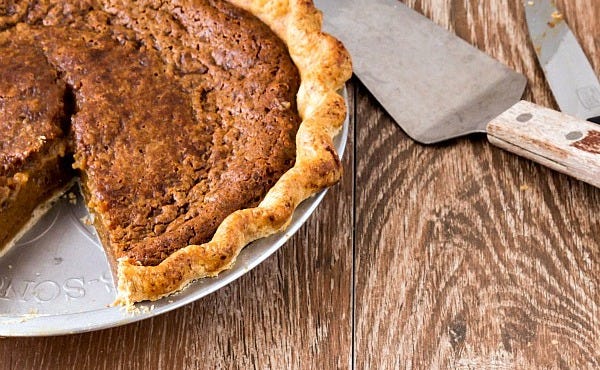
This pie delivers tons of complex flavor. There are caramel notes from the coconut sugar and sorghum syrup, and the unmistakable bite of cinnamon.
1 (9”) unbaked pie shell
1 c. sorghum syrup (can substitute with molasses)
3 large eggs
2/3 c. coconut sugar (you may substitute light brown sugar or granulated sugar)
½ c. buttermilk
½ c. sour cream
½ tsp. salt
1 tsp. cinnamon
½ tsp. vanilla extract
8 gingersnap cookies, ground to dust in a food processor
1 egg whipped with 1 tsp. of water for egg wash
Line a pie pan with pie crust and place it in the freezer until you’re ready to bake. Set a rack in the center of the oven and preheat to 425°.
In a large bowl, whisk together the sorghum syrup and eggs until smooth. Add the coconut sugar (or granulated sugar), buttermilk, sour cream, salt, cinnamon, and vanilla. Beat with a whisk until smooth.
Add the crushed cookies—either stirring them in or scattering them in the bottom of the pie crust and pour the filling in after. Pour the pie filling into the pie crust, brush the exposed crust with egg wash, and slip the pie into the oven. Bake for 10 minutes.
Lower the heat to 350° and continue to bake until the pie is well puffed all over and set, about 40 minutes more. A little wiggle in the center is fine, but it shouldn’t be sloshy.
Chef’s Note: The internal temperature of the pie must be 180°. The eggs do not set up at the same temperature as they would usually.
Remove the pie to a rack to cool for about an hour and then chill. Serve cold, at room temp, or slightly warm with a big old scoop of vanilla ice cream or whipped cream.
I was introduced to "Shoo-fly pie" in summer of 1964 - in the Pennsylvania-Dutch area -and loved it! Even made it several times - and was lucky to get some sold by a small-town volunteer fire department in Pennsylvania a couple years ago. Then, bringing them home to Atlanta was the challenge! Luckily the TSA guys at ABE airport - recognized the boxes- and knew the small town which made these pies once a month and sold them to support the fire department - opened the two boxes- sniffed and shook the pies - said "yep - those are the real shoo-fly pies" - tied up the boxes, and sent me on my way! Atlanta friends were introduced to Shoo-Fly Pie that night!
But, in the recipe today - was a Step left out? WHEN to put the mixture into the crust?? All I can see is "remove the pie weights and return to oven" ???
Shoo-Fly Pie:
Primarily made in the Pennsylvania Dutch communities in the east, early versions of Shoofly Pie can be traced back to cookbooks published at the turn of the 20th century. This pie was so popular that it made its way into community and church cookbooks throughout the country.
Thank you for your patience. Here are the completed instructions from the newsletter sent early today.
Shoo-Fly Pie
Ingredients
1 Single-crust pie pastry dough
1 1/2 cups (6 3/8 oz.) all-purpose flour
1/2 cup brown sugar
1/2 tsp. ground cinnamon
1/4 tsp. kosher salt
1/2 cup (4 oz.) cold unsalted butter, cubed
1 cup molasses
3/4 cup boiling water
1 tsp. baking soda
1 egg, lightly beaten
Whipped cream for garnish, optional
Bake pie crust:
Preheat oven to 425°F. Line the pie crust with parchment paper and fill with pie weights or dried beans.
Bake in the preheated oven on the lower rack until the edges are golden, about 15 minutes. Remove parchment and pie weights; continue baking until lightly golden, about 5 more minutes. Cool on a wire rack to room temperature, about 30 minutes.
Make pie filling:
Decrease oven temperature to 350°F. Stir together flour, brown sugar, cinnamon, and salt in a medium bowl until evenly distributed. Add butter:
Add butter and, using your hands or a pastry cutter, incorporate butter into dry ingredients until no pieces of butter remain and the mixture resembles cornmeal. Set aside.
Make molasses mixture:
In a separate bowl, whisk together molasses, boiling water, and baking soda until molasses is fully dissolved. Once cooled slightly, add beaten egg and whisk to incorporate.
Add pie filling:
Sprinkle 1/3 cup of the flour mixture over the prepared pie crust. Using a ladle or a measuring cup with a handle, gently scoop or pour the molasses mixture into the pie shell.
Finish pie topping:
Sprinkle the reserved flour mixture evenly across the entire surface of the pie.
Bake pie:
Bake in a preheated oven until the center of the pie is set, about 40 minutes. Cool completely on a wire rack, about 2 hours. Serve at room temperature with whipped cream, if desired. Enjoy this delicious treat!